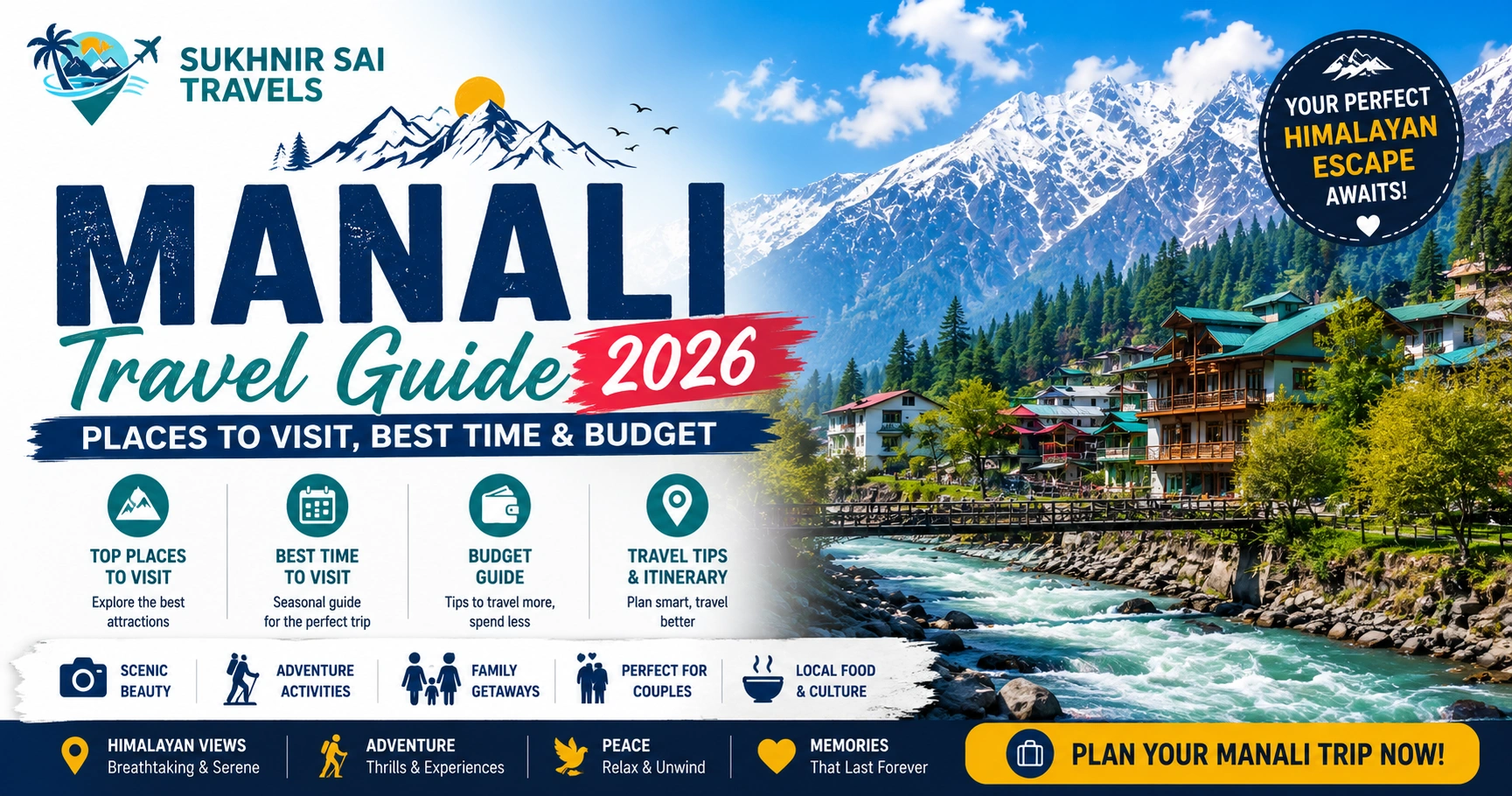
Manali Travel Guide 2026: Places to Visit, Best Time & Budget
If you're dreaming of snow-capped peaks, pine-scented valleys, and the kind of crisp mountain air that instantly clears your head, Manali is calling your name. Nestled in the Kullu Valley of Himachal Pradesh, Manali has long been India's favourite hill station — and in 2026, it's more accessible, more vibrant, and more exciting than ever before.
Whether you're planning a romantic getaway, a solo adventure, or group trips with friends, this comprehensive Manali travel guide covers everything you need to know: the best places to visit, the ideal time to go, a realistic budget breakdown, and insider tips to make your trip unforgettable.
Why Visit Manali in 2026?
Manali isn't just another hill station. It's a gateway to the Himalayas, a hub for adventure sports, a spiritual retreat, and a cultural melting pot all rolled into one. In 2026, the region has seen significant infrastructure improvements — better roads, upgraded accommodation options, and enhanced connectivity — making it easier than ever to explore both the popular hotspots and the hidden gems.
For travellers from Delhi and surrounding regions, Manali remains one of the most sought-after weekend trips from Delhi. The approximately 540-kilometre journey is well worth it, whether you choose to drive through the scenic Himalayan highways or take a comfortable Volvo bus.
Best Time to Visit Manali in 2026
Timing your visit is crucial to getting the most out of your Manali experience. The hill station offers something unique in every season, so your ideal time depends on what you're looking for.
Summer (March to June)
Temperature: 10°C to 25°C
Summer is peak tourist season in Manali. The weather is pleasant, the snow has melted at lower altitudes, and the meadows are in full bloom. This is the best time for sightseeing, paragliding, river rafting, and exploring nearby villages. If you're browsing tour packages from Delhi for a summer escape, Manali should be at the top of your list.
Pros: Perfect weather, all tourist spots accessible, ideal for adventure activities
Cons: Crowded, higher hotel rates, traffic jams on the Delhi-Manali highway
Monsoon (July to September)
Temperature: 10°C to 20°C
Monsoon brings lush greenery and fewer crowds, but it also comes with risks. Landslides are common, and outdoor activities may be restricted. However, if you don't mind the rain and want to experience Manali's romantic, mist-covered charm, this could be your season.
Pros: Discounted rates, lush landscapes, fewer tourists
Cons: Risk of landslides, limited adventure activities, leeches on trekking trails
Winter (October to February)
Temperature: -7°C to 10°C
Winter transforms Manali into a snowy wonderland. This is the best time to witness snowfall, especially in Solang Valley and Rohtang Pass (now accessible via Atal Tunnel). It's also the perfect season for honeymooners — which is why honeymoon packages international and domestic alike often feature Manali as a top winter destination.
Pros: Snowfall, winter sports, fewer crowds in early winter, magical scenery
Cons: Extreme cold, some roads may be blocked, heavy woollens essential
Our Recommendation for 2026
For the best overall experience, plan your trip between March and June or October and November. These windows offer the perfect balance of good weather, accessibility, and manageable crowds.
How to Reach Manali in 2026
By Road
The most popular way to reach Manali is by road. The Delhi-Manali highway (NH3) is well-maintained and offers breathtaking views. The journey takes approximately 12-14 hours by car or Volvo bus. Many travellers prefer overnight buses to save time.
If you're looking for weekend trips, leaving Delhi on Friday evening and returning Monday morning is a classic itinerary.
By Air
The nearest airport is Kullu-Manali Airport (Bhuntar), about 50 km from Manali. Flights operate from Delhi and Chandigarh, though schedules can be weather-dependent. From the airport, taxis and buses are readily available.
By Train
The nearest broad-gauge railway station is Chandigarh (about 310 km away), followed by Ambala Cantt and Kalka. From there, you can hire a taxi or take a bus to Manali.
Top Places to Visit in Manali
1. Solang Valley
No Manali travel guide would be complete without mentioning Solang Valley. Located 14 km from Manali town, this valley is an adventure lover's paradise. In summer, you can enjoy paragliding, zorbing, and horse riding. In winter, it transforms into a skiing and snowboarding hub.
Entry Fee: Free (activities charged separately)
Best Time: Year-round (snow sports in winter)
Pro Tip: Reach early in the morning to avoid long queues for adventure activities.
2. Rohtang Pass & Atal Tunnel
Rohtang Pass, at an altitude of 3,978 metres, was once the crown jewel of Manali tourism. While vehicle access to Rohtang is now restricted to protect the environment, the Atal Tunnel — the world's longest highway tunnel above 10,000 feet — has opened up seamless access to Lahaul-Spiti.
The tunnel reduces the distance to Keylong by 46 km and travel time by 3-4 hours. It's an engineering marvel and a must-experience on your Manali itinerary.
Permit Required: Yes, for Rohtang Pass (obtain online in advance)
Best Time: May to November
3. Old Manali
If the bustling Mall Road feels too commercial, head to Old Manali. This bohemian neighbourhood is lined with charming cafés, backpacker hostels, and tiny shops selling handmade jewellery and hippie clothing. The Manu Temple, dedicated to the sage Manu, is also located here.
Don't Miss: Café 1947, Lazy Dog Lounge, and the German Bakery
Vibe: Laid-back, artistic, perfect for solo travellers and couples
4. Hadimba Devi Temple
This ancient wooden temple, surrounded by cedar forests, is one of Manali's most iconic landmarks. Built in 1553, the temple is dedicated to Hadimba, the wife of Bhima from the Mahabharata. The pagoda-style architecture and serene setting make it a must-visit.
Entry Fee: Free
Best Time: Early morning for peaceful darshan
5. Vashisht Village & Hot Springs
Located 3 km from Manali, Vashisht is famous for its natural sulphur hot springs, believed to have healing properties. The village also has ancient temples and offers a more authentic, less touristy experience than central Manali.
Entry Fee: Free
Tip: Carry a change of clothes if you plan to take a dip
6. Manikaran Sahib
About 80 km from Manali, Manikaran is a pilgrimage site for both Sikhs and Hindus. The hot springs here are even more famous than those in Vashisht, and the gurudwara serves langar (community meal) throughout the day. It's often included in group tour packages as a day trip from Manali.
7. Jogini Waterfalls
A short trek from Vashisht village leads to the stunning Jogini Waterfalls. The 3-km trail passes through orchards, pine forests, and small villages. The waterfall itself is sacred, with a temple at its base.
Trek Difficulty: Easy to moderate
Duration: 2-3 hours round trip
8. Naggar Castle
This 15th-century castle, now a heritage hotel, offers panoramic views of the Kullu Valley. It also houses the Nicholas Roerich Art Gallery, dedicated to the famous Russian painter who made Kullu his home.
9. Hampta Pass Trek
For serious trekkers, the Hampta Pass trek is one of the most dramatic cross-over treks in Himachal. It starts from Jobri (near Manali) and crosses over into the barren landscapes of Lahaul-Spiti. Most tour packages offer guided versions of this trek.
Duration: 4-5 days
Difficulty: Moderate
10. Mall Road & Tibetan Market
Manali's Mall Road is the commercial heart of the town. It's perfect for evening strolls, shopping for woollens and souvenirs, and sampling local food. The nearby Tibetan Market is great for picking up handicrafts, prayer flags, and Buddhist artefacts.
Adventure Activities in Manali
Manali is often called the adventure capital of India, and for good reason. Here's what you can sign up for:
Table
|
Activity |
Location |
Approximate Cost (2026) |
|
Paragliding |
Solang Valley |
₹1,500 – ₹3,500 |
|
River Rafting |
Kullu (Beas River) |
₹1,000 – ₹2,000 |
|
Skiing |
Solang Valley |
₹500 – ₹1,500 (equipment + guide) |
|
Snowboarding |
Solang Valley |
₹1,000 – ₹2,500 |
|
Zorbing |
Solang Valley |
₹500 – ₹800 |
|
Trekking |
Hampta Pass, Bhrigu Lake |
₹5,000 – ₹15,000 (guided) |
|
Mountain Biking |
Manali-Leh Highway |
₹2,000 – ₹5,000/day |
|
Camping |
Solang, Tirthan Valley |
₹1,500 – ₹3,500/night |
Manali Budget Breakdown for 2026
One of the most common questions travellers ask is: "How much does a Manali trip cost?" Here's a realistic budget estimate for a 4-day, 3-night trip for two people.
Budget Traveller (₹15,000 – ₹25,000 for 2 people)
- Transport: Volvo bus from Delhi (₹1,500 – ₹2,500 per person, round trip)
- Stay: Hostels or budget guesthouses (₹1,000 – ₹2,000/night)
- Food: Local dhabas and cafés (₹800 – ₹1,200/day for two)
- Sightseeing: Local buses, shared taxis, self-guided walks
- Activities: Minimal paid activities, focus on free attractions
Mid-Range Traveller (₹30,000 – ₹50,000 for 2 people)
- Transport: Private cab or self-drive (₹8,000 – ₹15,000)
- Stay: 3-star hotels or boutique cottages (₹3,000 – ₹5,000/night)
- Food: Mix of local and restaurant dining (₹2,000 – ₹3,500/day)
- Sightseeing: Private taxi for local sightseeing (₹2,500 – ₹4,000/day)
- Activities: Paragliding, river rafting, guided treks
Luxury Traveller (₹60,000+ for 2 people)
- Transport: Private chauffeur-driven vehicle or flights to Bhuntar
- Stay: Resorts like Johnson Lodge, Span Resort, or luxury cottages (₹8,000+ /night)
- Food: Fine dining at premium restaurants
- Sightseeing: Private guided tours, helicopter rides (optional)
- Activities: All adventure sports, spa treatments, exclusive experiences
Money-Saving Tips
- Book buses and hotels in advance, especially during peak season
- Travel in a group — costs for taxis and accommodation get split
- Eat where locals eat — dhabas near the bus stand serve delicious, affordable meals
- Avoid peak weekends — rates spike on long weekends and holidays
- Check our Domestic Tours for curated tour packages that bundle transport, stay, and sightseeing at better rates
Where to Stay in Manali
Manali offers accommodation for every budget and travel style:
Manali Town (Mall Road Area)
- Best for: First-time visitors, families, shoppers
- Pros: Central location, easy access to restaurants and markets
- Cons: Crowded, noisy, higher prices
Old Manali
- Best for: Backpackers, solo travellers, couples, digital nomads
- Pros: Peaceful, cafés and nightlife, riverside stays
- Cons: 2-3 km from Mall Road, hilly terrain
Vashisht
- Best for: Budget travellers, those seeking hot springs
- Pros: Cheaper accommodation, authentic village feel
- Cons: Away from the main action
Solang Valley / Naggar Road
- Best for: Adventure seekers, nature lovers
- Pros: Stunning views, close to adventure activities
- Cons: Need private transport to reach town
What to Pack for Manali
Your packing list will vary by season, but here are the essentials:
Universal:
- Valid ID proof (required for Rohtang Pass permit)
- Comfortable walking shoes
- Power bank (electricity can be erratic in remote areas)
- Basic medicines for altitude sickness, cold, and stomach issues
- Sunscreen and sunglasses (UV is strong at high altitude)
Summer:
- Light woollens for evenings
- Cotton clothes for daytime
- Rain jacket (unexpected showers are common)
Winter:
- Heavy woollens, thermals, and down jacket
- Woollen cap, gloves, and warm socks
- Waterproof shoes with good grip
Local Food to Try
Manali's food scene is a delightful mix of Himachali, Tibetan, and international cuisines:
- Siddu — A steamed bread stuffed with poppy seeds and walnuts, served with ghee
- Dham — A traditional Himachali feast served during festivals
- Thukpa & Momos — Tibetan staples available everywhere
- Trout Fish — Freshly caught and grilled, a local speciality
- Apple Pie & Apple Cider — Kullu Valley is famous for its apples
Insider Tips for Manali in 2026
- Get your Rohtang Pass permit online at least 2-3 days in advance. Only a limited number of vehicles are allowed daily.
- Start early for Solang Valley and Rohtang to beat the traffic and queues.
- Carry cash — ATMs can run out of money, and many small shops don't accept cards.
- Respect local culture — dress modestly when visiting temples and villages.
- Don't rush — Manali is best experienced slowly. Spend at least 4-5 days to truly soak it in.
- Consider a Manali-Kasol-Tosh circuit if you have extra time. These villages offer a completely different vibe.
- Book adventure activities through licensed operators only. Safety standards vary.
Sample Manali Itinerary (4 Days / 3 Nights)
Day 1: Arrival & Local Sightseeing
- Arrive in Manali by morning
- Check into your hotel
- Visit Hadimba Devi Temple, Van Vihar, and Mall Road
- Evening stroll at the Tibetan Market
Day 2: Solang Valley & Adventure Day
- Early morning drive to Solang Valley
- Paragliding, zorbing, and ropeway
- Return by afternoon, relax at a café in Old Manali
- Evening at Manu Temple and riverside
Day 3: Rohtang Pass / Atal Tunnel & Vashisht
- Full-day excursion to Rohtang Pass or through Atal Tunnel to Lahaul
- Visit Rahala Falls and Marhi on the way
- Return via Vashisht Hot Springs for a relaxing dip
Day 4: Naggar & Departure
- Morning visit to Naggar Castle and Roerich Art Gallery
- Lunch at a riverside café
- Depart for Delhi by evening Volvo
Why Book Your Manali Trip with Sukhnir Sai Travels?
At Sukhnir Sai Travels, we don't just sell tour packages — we craft experiences. Our Manali itineraries are designed by travellers who know the region inside out. Whether you're looking for a budget backpacking trip, a romantic honeymoon, or group tour packages with your college friends, we've got you covered.
Here's what you get when you book with us:
- Hand-picked stays with verified reviews
- 24×7 on-trip support via WhatsApp
- Transparent pricing with no hidden costs
- Customisable itineraries based on your pace and preferences
- Experienced local guides who know the secret spots
Final Thoughts
Manali in 2026 continues to be one of India's most rewarding travel destinations. Whether you're chasing snow, seeking adventure, or simply need a break from city life, this Himalayan gem delivers on every front. With improved connectivity, better infrastructure, and a thriving food and culture scene, there's never been a better time to visit.
Use this Manali travel guide as your starting point, but remember — the best travel moments are often the unplanned ones. The conversation with a local shopkeeper, the unexpected snowfall, the impromptu trek to a hidden waterfall. That's the magic of Manali.
Ready to plan your trip? Explore our curated Domestic Tours and find the perfect Manali package for you.
