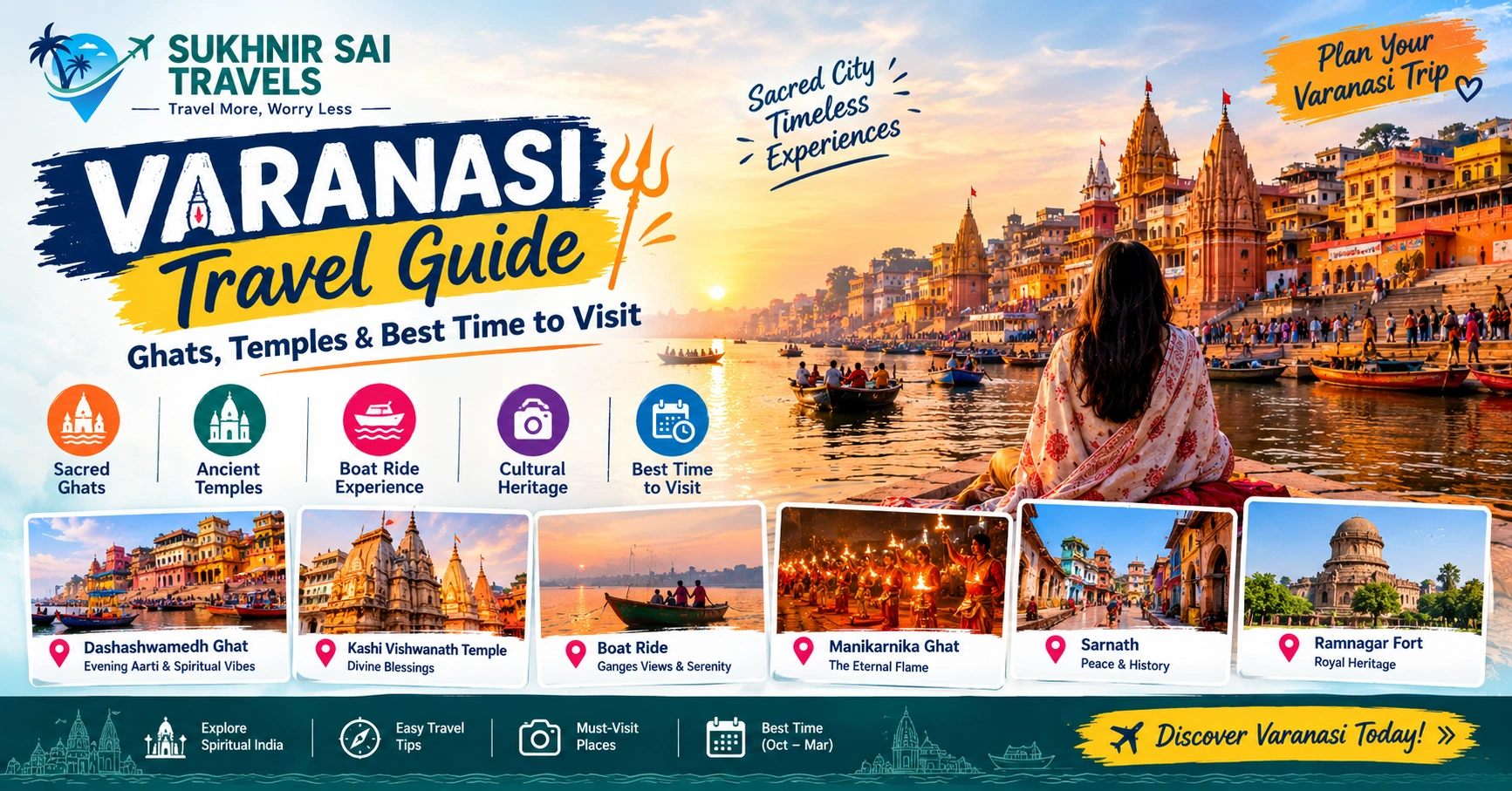
Varanasi Travel Guide: Ghats, Temples & Best Time to Visit
Varanasi is best visited October–March for comfortable weather, built around three things — the Kashi Vishwanath Temple, a Ganga Aarti at Dashashwamedh Ghat, and a sunrise boat ride along the ghats. Since the Kashi Vishwanath Corridor opened in 2021, the city's core pilgrim experience has genuinely changed — you can now walk directly from the temple to the river, something that simply wasn't possible before. If you're planning a first trip, everything below covers what's actually different in 2026, what to see, and how to plan around the crowds.
If you booked a Varanasi trip five years ago and are looking at it again now, be prepared — the city genuinely isn't the same place. The Kashi Vishwanath Corridor rebuilt the entire approach to the temple, a new urban ropeway is set to change how people move through the city, and visitor numbers have grown enormously — the temple alone has crossed 325 million visitors since the corridor opened in December 2021. This guide covers what's changed, what to actually see, and how to time your trip well.
What's Changed in Varanasi Recently
The Kashi Vishwanath Corridor Rebuilt the Temple's Entire Approach
Before 2021, reaching the Kashi Vishwanath Temple meant navigating narrow, crowded lanes with no direct view of the Ganga. The redevelopment created a 5-lakh-square-foot corridor that connects the temple's inner sanctum directly to Lalita Ghat on the river — pilgrims can now take a holy dip and walk straight up a wide, carved stone pathway to the deity. It's a genuinely different experience from what older travel accounts describe.
A New Ropeway Is Set to Change How You Move Through the City
Varanasi is building India's first urban cable car, connecting Varanasi Cantt Railway Station to the Kashi Vishwanath Dham area in around 15–16 minutes — a trip that can otherwise take much longer through the city's congested lanes. It's expected to open later in 2026, with tourist fares set around ₹50 per trip. If it's operational by your travel dates, it's worth using at least once, both for the convenience and the aerial view over the ghats.
The City Sees Far More Visitors Than It Used To
With daily footfall now regularly exceeding a lakh visitors, general darshan queues at Kashi Vishwanath can run 3–5 hours during busy periods. This is the single biggest practical thing that's changed for travellers — plan for it rather than being caught off guard, and consider a VIP or Sugam darshan slot (bookable online) if your schedule is tight.
The Religious Circuit Has Expanded Beyond the Main Temple
Alongside the main corridor, Varanasi has been developing dedicated circuits connecting other significant sites — the Nav Durga, Ashta Bhairav, and Dvadash Jyotirlinga circuits among them — plus a redeveloped Godaulia–Dashashwamedh pedestrian corridor to manage the crowds around the evening aarti, and a growing cruise tourism offering on the Ganga itself. If Devi temple circuits specifically interest you, our guide to places near Delhi for Navratri covers several Shakti Peeths worth pairing with a trip like this.
Best Time to Visit Varanasi
Quick answer: October to March, when temperatures sit comfortably between 15°C and 25°C.
October to March (Best Season)
Cool, clear weather makes this the ideal window for the early-morning boat rides and extensive ghat-walking that define a Varanasi trip. It's also peak season, so expect the biggest crowds and highest hotel rates of the year — book well ahead, especially around Dev Deepawali (the Ganga's festival of lights, typically in November).
April to June (Summer)
Genuinely hot, often crossing 40°C — manageable if you stick to early-morning and evening activities and avoid the midday sun, but not the most comfortable window for a first visit.
July to September (Monsoon)
The Ganga runs high and fast during monsoon, sometimes affecting access to the lower ghat steps. Lower prices and fewer tourists, but check current river levels before finalising boat-ride plans if travelling in this window.
Ghats Worth Your Time
Varanasi's riverfront is a 7-kilometre stretch of over 80 stone ghats — you won't see them all, and you don't need to. Here's what to actually prioritise.
Dashashwamedh Ghat
The main ghat, and the site of the famous evening Ganga Aarti — a highly choreographed ritual with fire, bells, and chanting performed by a row of priests each evening at sunset. This is the single most-repeated recommendation for good reason, and it's worth arriving at least 45 minutes early to get a good spot or boat position. If you enjoy this kind of riverside ritual, the evening aarti at Rishikesh is a smaller-scale but equally moving alternative closer to Delhi.
Manikarnika Ghat
One of the primary cremation ghats, where Hindu last rites are performed continuously. It's a solemn, deeply significant site tied directly to Varanasi's meaning as a place of liberation — respectful observation from a distance is standard, and this isn't a photo-op location.
Assi Ghat
A quieter, more residential ghat at the southern end of the riverfront, popular for sunrise yoga sessions, morning bhajans, and a genuinely calmer alternative if Dashashwamedh's evening crowds aren't your scene.
Temples Worth Visiting
Kashi Vishwanath Temple
The absolute centre of a Varanasi trip — one of the twelve Jyotirlingas dedicated to Lord Shiva, and now directly connected to the river via the corridor. Book a darshan slot online in advance if you want to manage the queue time. If temple-focused trips are your thing, our Krishna Janmashtami temple tour guide covers a similar circuit built around India's most significant Krishna temples.
Kaal Bhairav Temple
Local tradition holds that visitors should pay respects here before visiting Kashi Vishwanath — Kaal Bhairav is considered the city's guardian deity, and the temple has an intense, distinct atmosphere shaped by continuous chanting and the scent of mustard oil and incense.
Sankat Mochan Hanuman Temple
A significant Hanuman temple known for its association with the poet-saint Tulsidas, and a genuinely peaceful stop away from the density of the main ghat area.
Durga Temple (Monkey Temple)
Built in North Indian Nagara style and painted a distinctive red ochre, this temple is dedicated to Goddess Durga and named for the resident monkey population — worth a visit for the architecture as much as the religious significance.
A Realistic 3-Day Varanasi Itinerary
If you enjoy this kind of heritage-and-temple pacing, our Rajasthan royal heritage tour guide follows a similar circuit structure across forts and palaces instead of ghats and temples.
Day 1: Arrival & The Corridor
- Arrive, check in
- Afternoon walk through the Kashi Vishwanath Corridor, darshan at the main temple
- Evening at Dashashwamedh Ghat for the Ganga Aarti
Day 2: Boat Ride & Wider Temple Circuit
- Sunrise boat ride along the ghats — the classic, must-do Varanasi experience
- Morning visit to Kaal Bhairav Temple, then Sankat Mochan Hanuman Temple
- Afternoon exploring the old city's narrow lanes and local silk-weaving shops
- Evening free, or a second aarti viewing from a different vantage point
Day 3: Sarnath & Departure
- Morning day trip to Sarnath (roughly 30 minutes away), where Buddha delivered his first sermon
- Afternoon return, last-minute shopping for Banarasi silk
- Departure
Practical Answers to Common Planning Questions
Do I need to book Kashi Vishwanath darshan in advance? Not strictly required for general darshan, but with queues running 3–5 hours during busy periods, booking a paid Sugam or VIP darshan slot online in advance is a genuinely worthwhile time-saver if you're short on days.
How early should I arrive for the Ganga Aarti? At least 45 minutes before the sunset start time if you want a good ground position at Dashashwamedh Ghat, or book a boat in advance if you'd rather watch from the water.
Is the new ropeway operational yet? As of this writing, it's expected to open later in 2026 — check current status before your trip, since public transport infrastructure timelines like this can shift.
Is Varanasi safe for solo and family travellers? Yes, broadly — it's one of India's most-visited pilgrimage cities with correspondingly developed tourist infrastructure, though standard precautions around crowded ghats and the old city's narrow lanes (keeping valuables secure, being aware in dense crowds) apply as they would anywhere.
Varanasi Trip Budget (2026)
Here's a realistic estimate for a 3-day, 2-night trip for two people.
Budget Traveller (₹8,000 – ₹14,000 for 2 people)
- Stay: Budget hotels/guesthouses near the ghats (₹1,500 – ₹2,500/night)
- Food: Local dining and street food (₹800 – ₹1,200/day for two)
- Boat ride: Shared sunrise boat (₹200 – ₹400 per person)
- Local transport: Autos and walking
Mid-Range Traveller (₹18,000 – ₹28,000 for 2 people)
- Stay: 3–4 star hotels (₹4,000 – ₹6,500/night)
- Food: Mix of local and restaurant dining (₹1,500 – ₹2,200/day for two)
- Boat ride: Private sunrise boat
- VIP/Sugam darshan slot at Kashi Vishwanath
- Private car for the Sarnath day trip
Money-Saving Tips
- Book your hotel within walking distance of the ghats — it cuts down on local transport costs and lets you catch both sunrise and sunset activities without arranging a cab each time.
- Share a sunrise boat rather than booking a private one, unless you specifically want the flexibility of your own timing.
- Travel just before or after the October–March peak (early October or March) for good weather without the very highest hotel rates.
- Check our Domestic Tours page for bundled Varanasi packages that combine stays, a private boat ride, and Sarnath transport at better rates than arranging each separately.
- If you're travelling as a larger family group, our family trip budget planning guide covers a broader framework worth applying to a Varanasi trip too.
What to Pack for Varanasi
- Modest, comfortable clothing — shoulders and knees covered for temple visits
- Comfortable walking shoes suited to a lot of walking on stone ghat steps
- A light jacket for winter mornings (October–February), since riverside mornings are noticeably cooler than the daytime temperature suggests
- Sunscreen and a hat for daytime walking, even in the cooler months
- Hand sanitiser and basic first-aid, given the crowd density at major sites
- A power bank, useful during long queue waits at the temple
FAQs: Varanasi Travel Guide
1. What is the best time to visit Varanasi?
October to March, when temperatures are comfortable for the early-morning boat rides and extensive walking that a Varanasi trip involves. This is also peak season, so book accommodation ahead.
2. How has the Kashi Vishwanath Corridor changed the temple visit?
It created a direct, wide pathway connecting the temple's inner sanctum to Lalita Ghat on the Ganga, replacing the narrow, congested lanes that used to be the only approach — pilgrims can now take a holy dip and walk straight up to the temple.
3. How many days are ideal for a Varanasi trip?
Three days comfortably covers the Kashi Vishwanath Corridor, a sunrise boat ride, the main temple circuit, and a Sarnath day trip. Two days works if you're tighter on time and skip Sarnath.
4. Is the Ganga Aarti worth attending?
Yes — the evening Ganga Aarti at Dashashwamedh Ghat is one of Varanasi's most distinctive experiences, and it's worth watching at least once from the ghat itself and, if you have time, once more from a boat on the river.
5. What is Sarnath and is it worth visiting?
Sarnath, about 30 minutes from central Varanasi, is where Buddha delivered his first sermon after enlightenment — a significant Buddhist pilgrimage site and a worthwhile half-day addition if you have a third day in the city.
6. Can Sukhnir Sai Travels plan a Varanasi trip for me?
Yes — we can arrange stays near the ghats, a private sunrise boat ride, VIP darshan slots, and a Sarnath day trip as part of a bundled Varanasi itinerary.
Plan Your Varanasi Trip with Sukhnir Sai Travels
From a sunrise boat ride along the ghats to a smooth Kashi Vishwanath darshan, we can build a Varanasi itinerary that accounts for the crowds and gets you to what actually matters.
